
For many professionals, spending most of the day on their feet is unavoidable. A busy restaurant worker may stand in one place for hours, a nurse may walk between different areas of a hospital, and a retail employee may spend an entire shift helping customers without much opportunity to sit.
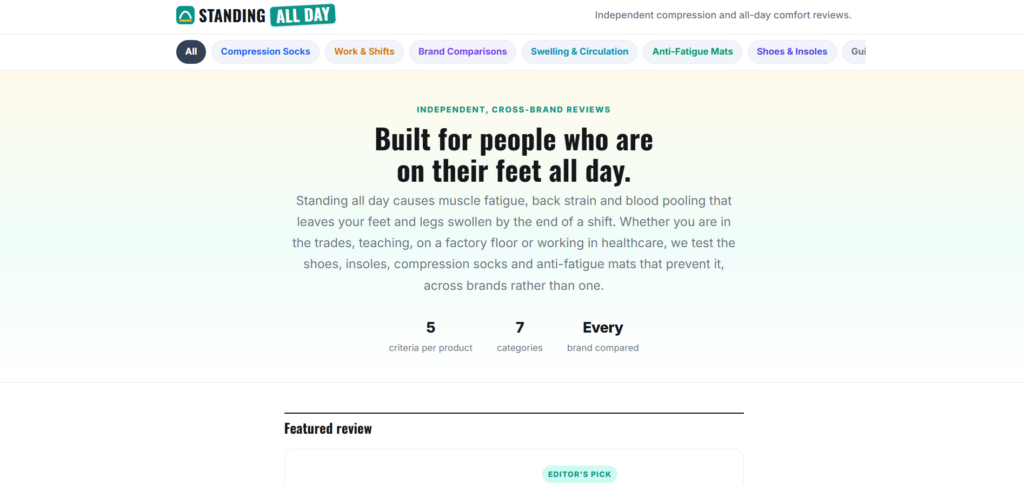
Because prolonged standing is such a common part of working life, finding practical ways to stay comfortable is important. StandingAllDay.com is a useful focus for exploring footwear, workplace setup, movement, posture, and recovery strategies for people who spend long periods on their feet.
The Challenge of Prolonged Standing
Standing requires constant muscular effort. Even when you appear to be still, your body is making small adjustments to maintain balance.
Over several hours, this can contribute to tired feet and legs. The experience can be more demanding when the floor is hard, footwear is unsuitable, or the worker has limited opportunities to change position.
Understanding these factors can help workers make smarter choices about their daily routines.
Begin With Comfortable Footwear
Your shoes are one of the most important parts of a standing-based work routine.
A good work shoe should fit correctly, feel stable, and provide suitable cushioning for the environment. Avoid selecting footwear based only on appearance. The most attractive option isn’t necessarily the most comfortable choice for a long shift.
Consider the specific demands of your job before making a purchase.
Think About Workplace Requirements
Different occupations require different types of footwear.
Restaurant employees may need slip-resistant shoes. Construction workers may need protective footwear. Healthcare workers may prefer lightweight shoes that are easy to maintain.
Comfort matters, but workplace safety requirements should always be considered first.
Replace Shoes When They Wear Out
Even good shoes eventually lose their effectiveness.
Regularly inspect the soles and overall structure of your work footwear. Uneven wear, damaged materials, and reduced cushioning can all indicate that the shoes are approaching the end of their useful life.
Continuing to use worn-out shoes may make an already demanding shift feel even more uncomfortable.
Consider an Anti-Fatigue Mat
If you stand in one location for long periods, consider whether an anti-fatigue mat would be appropriate.
These mats are commonly used at service counters, kitchen stations, laboratory workstations, and other areas where workers spend significant time standing.
A suitable mat can provide a softer surface beneath your feet than hard flooring. It should be stable and compatible with the safety requirements of your workplace.
Keep Changing Your Position
Standing doesn’t mean you have to remain frozen in one position.
Shift your weight between your feet. Take a few steps when possible. Move your ankles and adjust your stance.
These small movements can help break up long periods of stationary standing and make your shift feel less repetitive.
Maintain Comfortable Posture
Your posture can influence how your body feels at the end of the day.
Avoid consistently leaning on one side or locking your knees. Keep your shoulders relaxed and try to maintain a balanced position.
It’s also important to remember that good posture involves movement. Changing positions throughout the day is generally more practical than attempting to hold one “perfect” posture continuously.
Adjust Your Workstation
If your job involves a fixed workstation, look at the height and arrangement of the equipment.
Frequently used items should be accessible without excessive bending or reaching. Counters and work surfaces should be at a comfortable height whenever adjustments are possible.
A few ergonomic changes can reduce unnecessary movements throughout a long shift.
Use Breaks to Change Position
Breaks provide a valuable opportunity to give your body a different type of activity.
If you’ve been standing, sitting for a while may feel beneficial. If sitting isn’t possible, walking slowly or changing tasks can still provide variation.
Making the most of available breaks can help divide a long workday into more manageable periods.
Keep Water Nearby
Staying hydrated is another simple part of maintaining your overall wellbeing.
Where workplace policies permit it, keep water accessible and drink regularly according to your individual needs. Workers in hot environments may need to pay particular attention to fluid intake.
Hydration won’t solve every standing-related problem, but it is an important part of a healthy daily routine.
Don’t Ignore Your Socks
Comfort isn’t limited to shoes.
Socks that fit properly can reduce bunching and unnecessary friction inside your footwear. Depending on the environment, breathable materials may also improve comfort.
If you’re considering compression socks for a specific health concern, seek appropriate professional guidance about whether they are suitable for you.
Create an Evening Recovery Routine
After a long shift, your body deserves time to recover.
Change out of your work shoes and allow your feet and legs to relax. Sitting comfortably or using gentle movements may help you transition from work to rest.
Some people also enjoy briefly elevating their legs after a demanding day. If something causes pain or discomfort, stop and seek appropriate advice.
Pay Attention to Persistent Problems
Not every ache after a long shift indicates a serious issue. However, persistent symptoms should not automatically be dismissed.
If pain continues despite rest and changes to footwear or working habits, consider consulting a healthcare professional.
Sudden severe pain, significant swelling, numbness, or weakness warrants appropriate medical attention.
Small Improvements Can Make a Difference
You don’t need an expensive solution to improve your working routine.
Start with simple steps. Check your shoes, adjust your workstation, take advantage of breaks, and change your standing position regularly.
Once these habits become natural, you can evaluate other areas of your work environment and make additional improvements.
Why StandingAllDay.com Is Relevant
The focus of StandingAllDay.com connects directly with the everyday needs of people who work on their feet.
It can cover a broad range of practical subjects, including work footwear, anti-fatigue mats, posture, standing ergonomics, movement, hydration, and recovery.
The most useful approach is not to assume that one strategy works for everyone. Different jobs and individuals have different requirements.
Final Thoughts
Long shifts on your feet can be demanding, but better preparation can make them more manageable. Comfortable footwear, a suitable standing surface, regular movement, proper posture, an organized workstation, and adequate recovery all deserve attention.
StandingAllDay.com provides a strong focus for discussing these everyday challenges and practical solutions. By developing simple, sustainable habits and listening to your body’s needs, you can create a more comfortable routine for the working day.